The Small Business Evolution: Navigating the New Tech Environment

American small businesses have entered a new phase of technology adoption, building upon the rapid digital acceleration of recent years and shifting toward more deliberate, operationally focused modernization. As 2026 begins, small and medium-sized businesses (SMBs) increasingly prioritize systems that reduce friction across day-to-day work, strengthen reliability for customers and staff, and support scalable growth without adding unnecessary complexity. This next phase is defined by practical automation, high-performance networking, and security standards that now sit within reach of organizations that previously viewed them as enterprise-only capabilities.
In this new era, technology functions as the operating framework for how work moves through the business, from customer transactions and collaboration to data stewardship and service delivery. A growing number of SMBs standardize on tools that improve speed, continuity, and governance while meeting expectations for seamless digital experiences and strong data protection. This report examines the key technology shifts shaping 2026 and provides a clear roadmap for navigating the new environment with confidence and control.
The Industrialization of Artificial Intelligence
Artificial Intelligence (AI) has moved past the experimental phase and has become a central efficiency tool for the modern enterprise. In 2026, the application of AI in the small business sector is focused on operationalization, moving from broad concepts to specific, high-impact use cases. According to recent industry trends, a significant majority of SMBs have integrated some form of AI into their daily workflows, citing measurable improvements in cost reduction and customer acquisition.
Small businesses are utilizing AI-powered automation to handle routine administrative tasks that previously consumed valuable human resources. Appointment scheduling, data entry, and meeting documentation are now managed by intelligent agents that operate with higher precision and lower latency than traditional manual methods. Furthermore, AI-enhanced customer service platforms allow small operators to provide 24/7 support, effectively bridging the gap between localized service and global expectations.

Beyond simple task automation, AI is being deployed for predictive analytics. By analyzing historical sales data and market trends, small businesses can now forecast inventory needs and staffing requirements with remarkable accuracy. This level of insight enables organizations to operate with leaner margins and greater agility, ensuring that capital is deployed where it is most effective.
Resilient Connectivity Through SD-WAN Solutions
As businesses become more reliant on cloud-based applications and real-time data processing, the requirement for consistent, high-bandwidth connectivity has become absolute. The year 2026 marks a decisive shift away from legacy networking hardware toward more flexible, software-defined architectures. Modern organizations are increasingly implementing sd-wan solutions to manage their growing connectivity demands.
Software-Defined Wide Area Networking (SD-WAN) allows businesses to prioritize critical traffic, such as Voice over IP (VoIP) and point-of-sale transactions, over less essential data. This ensures that even during periods of high network congestion, the most vital business functions remain operational. For small businesses with multiple locations or a hybrid workforce, these solutions provide a unified network fabric that is both scalable and easy to manage from a centralized dashboard.
The adoption of SD-WAN is also driven by the need for network redundancy. By combining multiple connection types, such as fiber optics, cable, and 5G, SD-WAN ensures that a failure in one circuit does not result in a total loss of connectivity. In an environment where even a few minutes of downtime can result in significant revenue loss and damage to brand reputation, the resilience offered by these networking technologies is indispensable.
Scaling Enterprise Cybersecurity Solutions for SMBs
The democratization of sophisticated cyber-attacks has necessitated a corresponding evolution in defensive strategies for small businesses. The distinction between "small business security" and "enterprise security" has effectively vanished, as the value of data remains high regardless of the size of the organization holding it. Consequently, 2026 has seen a surge in the adoption of comprehensive enterprise cybersecurity solutions among smaller firms.
The current threat landscape is characterized by increasingly complex phishing schemes, ransomware-as-a-service, and supply chain vulnerabilities. To counter these threats, small businesses are moving toward a Zero Trust architecture. This security model operates on the principle of "never trust, always verify," requiring authentication for every user and device attempting to access resources on the network, regardless of whether they are inside or outside the traditional office perimeter.
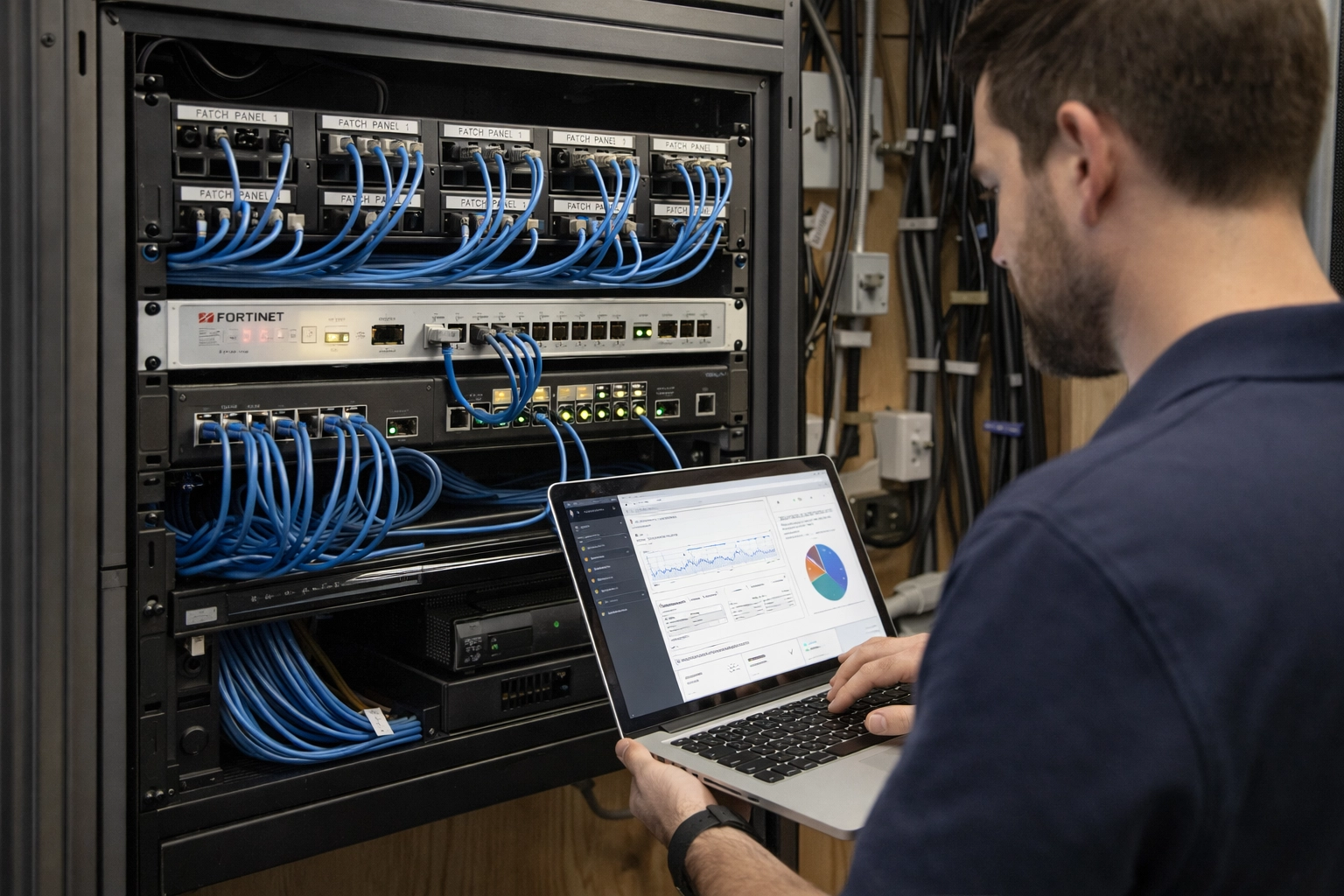
Key components of this security evolution include:
Multi-Factor Authentication (MFA): Now a standard requirement for all business applications.
Endpoint Detection and Response (EDR): Providing real-time monitoring and automated responses to threats at the device level.
Encrypted Communications: Ensuring that data in transit remains inaccessible to unauthorized parties.
Predictive Compliance: Utilizing AI to monitor regulatory changes and automatically adjust security settings to maintain compliance with industry standards.
By investing in these advanced security frameworks, small businesses not only protect their own intellectual property but also build the trust necessary to engage in high-value partnerships with larger organizations.
The Convergence of 5G and Cloud Infrastructure
The synergy between high-speed wireless connectivity and cloud computing is enabling a new level of operational flexibility. In 2026, the concept of a "mobile-first" business is no longer a niche strategy but a standard operating procedure. The widespread availability of 5G networks has provided the bandwidth and low latency required to run complex, cloud-hosted applications from virtually any location.
This convergence is particularly impactful for industries such as retail, hospitality, and field services. Employees can access real-time inventory data, process payments, and collaborate with remote teams using mobile devices that have the same processing power and connectivity as a traditional office workstation. This shift has facilitated the rise of augmented reality (AR) workspaces, which are being used for everything from virtual property tours in real estate to remote equipment repair in the manufacturing sector.
Furthermore, cloud-first infrastructure allows small businesses to scale their technology footprint without the significant capital expenditure associated with on-premises servers. This "pay-as-you-grow" model ensures that technology remains an enabler of growth rather than a financial barrier to it.

Sustainability and the Digital Footprint
A notable trend in the 2026 evolution is the integration of sustainability into technology procurement. Small businesses are recognizing that digital efficiency often aligns with environmental responsibility. The transition to cloud-based services reduces the energy consumption associated with maintaining physical data centers, while digital collaboration tools minimize the carbon footprint related to business travel.
Organizations are also adopting "Green IT" practices, which involve selecting hardware with longer lifecycles and higher energy efficiency ratings. Sustainability analytics software is becoming a common tool for tracking and reporting an organization's environmental impact, a factor that is increasingly important to modern consumers and investors. This focus on sustainable technology adoption is not merely a matter of corporate social responsibility; it is a strategic move to future-proof operations against rising energy costs and evolving environmental regulations.
Practical Implementation and Strategic Planning
The transition to these advanced technologies requires a structured approach to implementation. For most small businesses, the primary challenge is not the availability of technology, but the integration of disparate systems into a cohesive whole. Successful organizations in 2026 are those that view technology through the lens of long-term strategy rather than short-term fixes.

To effectively navigate this evolution, businesses should consider the following steps:
Audit Existing Infrastructure: Identify legacy systems that are creating bottlenecks or security risks.
Prioritize Connectivity: Ensure that the foundational network can support the bandwidth requirements of AI and cloud applications.
Implement Layered Security: Deploy enterprise cybersecurity solutions that protect data across all touchpoints, from the cloud to the mobile endpoint.
Invest in Training: Ensure that staff are proficient in using new tools, particularly AI-driven automation platforms.
Monitor and Iterate: Use data analytics to measure the impact of technology investments and adjust strategies as necessary.
The evolution of small business technology is an ongoing process. As we move further into 2026, the ability to adapt to new developments will be the primary differentiator between businesses that merely survive and those that thrive in the digital economy.
The advancements in sd-wan solutions and the accessibility of sophisticated security protocols have leveled the playing field, allowing small businesses to compete with much larger counterparts. By embracing these changes, organizations can build a resilient, efficient, and secure foundation for the years to come.
For personalized assistance in navigating these technological shifts and identifying the right solutions for your organization, please contact our team at (904) 988-4979. We are dedicated to providing the expertise and support necessary to help your business evolve and succeed in the modern marketplace.

Summative Observations
The small business evolution of 2026 is defined by the convergence of high-performance networking, pervasive artificial intelligence, and rigorous security standards. While the pace of change remains rapid, the tools available to manage this complexity have become more intuitive and accessible. By prioritizing connectivity and security, small businesses can leverage the full power of modern technology to drive innovation and operational excellence. The moves made today will determine the competitive landscape of tomorrow, making proactive technology adoption a critical component of any successful business strategy.
Comments